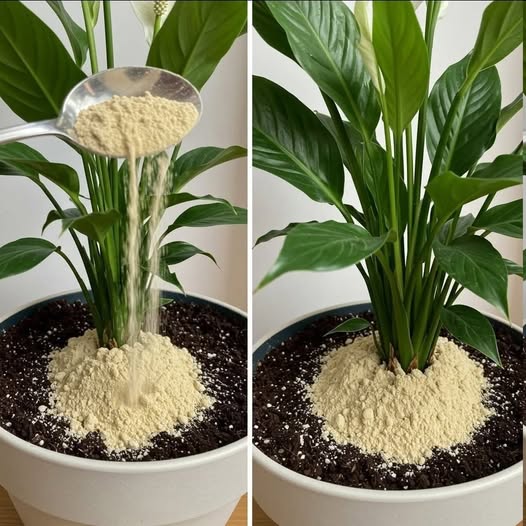
Peace lilies are famous for their elegant white flowers and lush green leaves. That makes viral gardening claims about a “secret ingredient” that can keep a peace lily blooming for 10 years especially tempting.
What can make a dramatic difference is giving the plant the right growing conditions—and one simple nutrient can help when the plant is actually lacking it.
The “One Ingredient” Secret: Fertilizer
If your peace lily has healthy leaves but rarely produces flowers, the problem may be insufficient nutrition.
A balanced, complete houseplant fertilizer can provide nutrients the plant needs for healthy growth and flowering. Rather than relying on kitchen scraps or homemade mixtures, use a fertilizer according to its label instructions.
More fertilizer does not mean more flowers. Overfertilizing can cause salt buildup in the soil and damage the roots.
Why Your Peace Lily May Not Be Blooming
Nutrition is only one part of the equation.
1. It Needs Enough Light
Peace lilies tolerate lower light, but very low light can reduce flowering.
Place the plant somewhere with bright, indirect light. Avoid harsh midday sunlight directly hitting the leaves, which can scorch them.
A plant sitting in a dark corner may survive—but survival and flowering are not the same thing.
2. Don’t Overwater It
Peace lilies like evenly moist soil, but constantly soggy soil can suffocate the roots and contribute to root problems.
Water when the upper portion of the soil has started to dry, then allow excess water to drain away.
Never leave the pot sitting in stagnant water.
3. Give the Roots Room
A severely root-bound plant may struggle to maintain vigorous growth.
If roots are tightly circling the inside of the pot or emerging from the drainage holes, it may be time to repot into a slightly larger container.
Don’t jump to an enormous pot, though. Excess soil can stay wet for too long.
4. Keep Temperatures Comfortable
Peace lilies generally prefer warm indoor conditions and can react poorly to cold drafts.
Keep them away from very cold windows, air-conditioner blasts, heaters and sudden temperature changes.
What About Banana Water, Rice Water or Sugar?
These remedies are frequently promoted as natural flowering boosters.
They are not magic fertilizers.
Banana water may contain some minerals, but its nutrient concentration is unpredictable. Rice water likewise isn’t a balanced fertilizer, while adding sugar to soil can create other problems without providing the plant with the nutrition it actually needs.
If you want reliable nutrition, a properly formulated houseplant fertilizer is a better choice.
Can a Peace Lily Really Bloom for 10 Years?
A healthy peace lily can live for many years indoors, but its flowering will naturally vary.
Factors such as:
- light
- plant age
- nutrition
- watering
- temperature
- root health
- seasonal growth
can all influence how often flowers appear.
So the realistic goal isn’t to make the plant bloom nonstop for a decade. It’s to create conditions that allow it to remain healthy and produce flowers repeatedly over the years.
A Simple Peace Lily Care Routine
For better long-term growth:
- Give it bright, indirect light.
- Water when the soil begins to dry rather than following a rigid calendar.
- Make sure the pot has drainage holes.
- Use a complete houseplant fertilizer sparingly and according to the label.
- Remove yellow or badly damaged leaves.
- Wipe dusty leaves gently so they can photosynthesize efficiently.
- Repot when the plant becomes seriously root-bound.
- Protect it from extreme temperatures and drafts.
Don’t Fall for the “More Is Better” Trap
One of the biggest mistakes with flowering houseplants is repeatedly adding homemade ingredients in the hope of forcing blooms.
Salt, baking soda, concentrated fertilizer, undiluted vinegar and sugary mixtures can damage the soil or roots.
A peace lily doesn’t need a complicated recipe. Consistent care is usually more valuable than a viral ingredient.
The Bottom Line
There is no single ingredient proven to make a peace lily bloom continuously for 10 years.
If you want more flowers, start with the basics: bright indirect light, appropriate watering, healthy roots and balanced nutrition.
A good-quality houseplant fertilizer can help when nutrients are limiting, but it works as part of an overall care routine—not as a miracle flowering potion.
With the right conditions, your peace lily can stay healthy and reward you with beautiful flowers for many years.