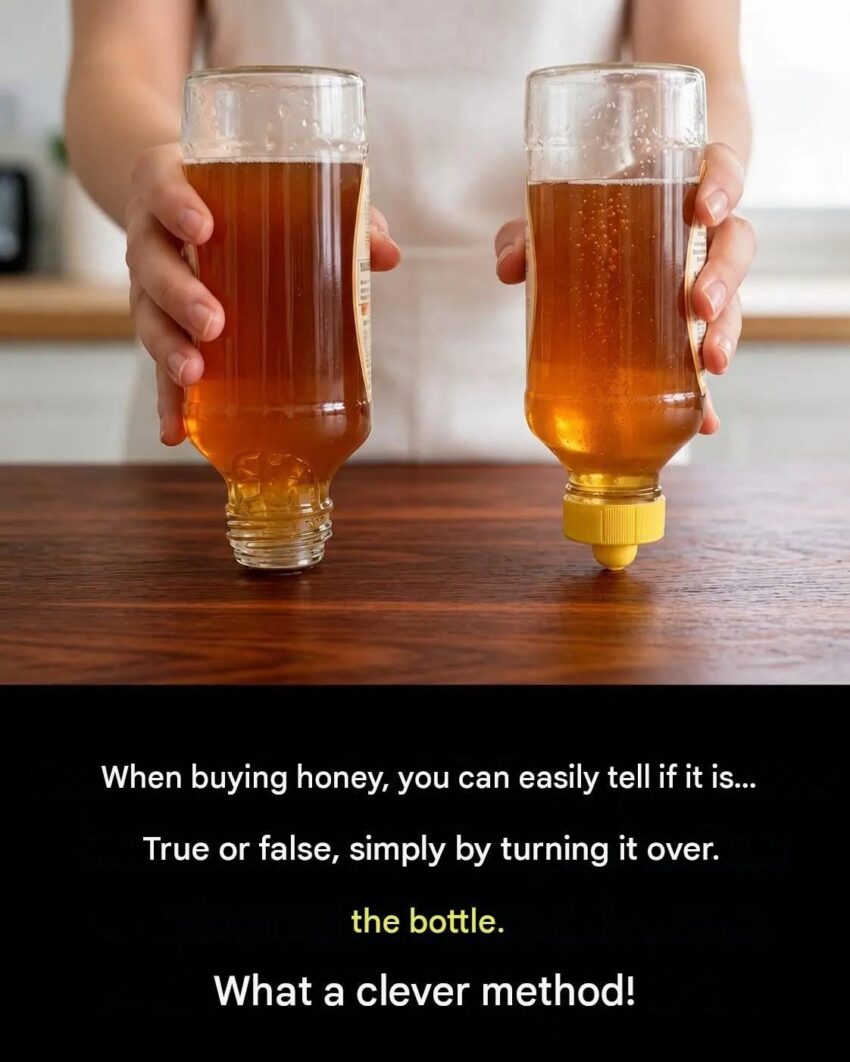
Honey is often marketed as a natural, wholesome food—but not every jar labeled “honey” is necessarily pure. Some products may be diluted with inexpensive sweeteners or sold with misleading claims.
So, how can you avoid being deceived?
Don’t Rely on Viral Home Tests
You may have seen tricks such as dropping honey into water, lighting it with a match, or checking whether it crystallizes. These tests are popular online, but they cannot reliably prove that honey is pure.
For example, pure honey can vary greatly in thickness and crystallization depending on its floral source, temperature, and processing. Water or flame tests can therefore give misleading results.
The Simple Trick: Check the Label and Source
The most practical approach is to buy honey from a reputable producer or trusted seller and carefully check the packaging.
Look for:
- A clear ingredient list: Ideally, honey should be the only ingredient.
- A trustworthy producer: Choose established brands, beekeepers, or sellers with a good reputation.
- Proper labeling: Avoid products making exaggerated claims such as “cures diabetes” or “detoxes the body.”
- Batch and traceability information: Professional packaging should provide useful details about the product and producer.
What About Crystallized Honey?
Don’t automatically assume crystallized honey is fake. Natural honey commonly crystallizes over time, and the speed depends on its floral source and storage conditions.
If you prefer it liquid, place the sealed container in warm water and allow it to soften gradually. Avoid overheating it.
Why Adulteration Matters
Adulterated honey may contain added sugar syrups or other inexpensive sweeteners. These additions can reduce the nutritional and economic value of the product while making it difficult for consumers to know what they are actually buying.
For people who regularly consume honey, choosing a trustworthy source is more useful than relying on a viral kitchen experiment.
Bottom Line
There is no simple water, flame, or tissue-paper test that can reliably prove honey is pure. The safest everyday strategy is to check the ingredients, buy from a reputable source, and look for proper labeling and traceability.
When purity really matters, laboratory testing is far more reliable than internet “honey hacks.”
Remember: Pure honey is still a form of added sugar, so enjoy it in moderation—especially if you are watching your blood glucose or total calorie intake.