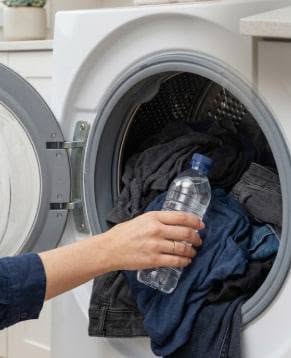
You may have seen the unusual laundry tip of putting an empty plastic bottle inside the washing machine before starting a wash.
The idea sounds strange, but there is a reason people try it: some claim that the bottle can help separate clothes, improve movement inside the drum, or make washing certain bulky items easier.
However, a plastic bottle is not a universally recommended washing-machine accessory, and using the wrong bottle or washing cycle could create problems.
Here’s what you should know before trying the trick.
Why Do People Put a Plastic Bottle in the Washing Machine?
The basic idea is that an empty plastic bottle moves around inside the drum as the machine operates.
This movement may:
- Help create additional agitation among loose garments
- Keep some items from clumping together
- Separate pieces of laundry during washing
- Potentially help bulky items move more freely
The effect depends heavily on the washing machine, the type of laundry, the bottle, and the cycle being used.
There is no guarantee that the trick will make clothes significantly cleaner.
The Trick Is Most Often Associated With Bulky Laundry
People sometimes use this idea when washing items that tend to become heavy and tangled, such as:
- Jackets
- Blankets
- Quilts
- Duvets
- Large towels
Bulky items can absorb a substantial amount of water and become difficult to distribute evenly around the drum.
A bottle may move around with the laundry, but it doesn’t replace the washing machine’s normal balancing and agitation mechanisms.
Don’t Put Just Any Plastic Bottle in the Machine
If someone chooses to experiment with this trick, the bottle should be considered carefully.
Avoid bottles that are:
- Cracked
- Brittle
- Sharp around the opening
- Damaged
- Covered with loose labels or pieces that could detach
- Made from material that may not tolerate the washing conditions
A damaged bottle can break or deform during the cycle.
What about the cap?
A loose cap can become a separate object inside the machine.
If the bottle is used at all, it should be securely closed and in good condition. However, even a firmly capped bottle isn’t guaranteed to be suitable for every machine or cycle.
Could a Plastic Bottle Damage the Washing Machine?
A lightweight plastic bottle is unlikely to behave like a heavy metal object, but that doesn’t mean it is risk-free.
Potential problems include:
- The bottle becoming trapped in an unusual position
- Plastic pieces breaking away
- Noise during the spin cycle
- Interference with certain delicate items
- Problems if the bottle gets caught around a seal or other component
For this reason, check your washing-machine manufacturer’s instructions before introducing objects that aren’t designed for use in the drum.
Don’t Use This Trick With Hot Washes
Heat can affect different types of plastic differently.
A bottle designed for cold beverages isn’t necessarily designed to withstand the temperatures used in a hot washing cycle.
High heat can cause some plastics to soften, deform, or become damaged.
If a manufacturer does not recommend placing a particular plastic container in a washing machine, it’s better not to experiment with it.
Don’t Use a Bottle With Delicate Clothing
Delicate fabrics can be damaged by unnecessary friction or contact with hard objects.
Avoid experimenting with plastic bottles when washing:
- Lace
- Silk
- Fine wool
- Delicate lingerie
- Very thin fabrics
- Garments with fragile decorations
For delicate clothing, use the recommended gentle cycle and laundry methods instead.
What About Down Jackets and Duvets?
Bulky items filled with down or synthetic insulation can clump during washing.
The more important factors are usually:
- Following the item’s care label
- Using an appropriate detergent
- Selecting the correct washing cycle
- Avoiding overloading
- Ensuring thorough rinsing
- Drying the item completely
Some manufacturers recommend specific dryer techniques or dryer balls for certain items.
Always follow the care instructions for the garment or bedding first.
Better Alternatives: Laundry or Dryer Balls
If your goal is to help separate bulky laundry, purpose-made laundry or dryer balls are a more predictable option than an improvised plastic bottle.
Dryer balls, in particular, are designed to move among clothing during drying and can help separate items and improve airflow.
They are not magic cleaning devices, however, and they do not eliminate the need for proper washing and drying.
The Biggest Laundry Mistake Isn’t the Lack of a Bottle
Many laundry problems have much simpler causes.
Overloading the machine
If the drum is packed too tightly, water and detergent may not circulate properly.
Using too much detergent
More detergent does not necessarily mean cleaner clothes. Excess detergent can leave residue on fabrics and inside the machine.
Choosing the wrong cycle
Different fabrics and levels of soiling require different washing programs.
Ignoring the care label
Temperature, spin speed, and drying instructions matter.
Not cleaning the machine
Detergent residue, dirt, and moisture can accumulate inside the machine over time.
Regular maintenance is important for hygiene and performance.
So, Should You Put a Plastic Bottle in Your Washing Machine?
It’s not a necessary laundry trick.
A lightweight, intact bottle may move around and potentially help separate certain bulky items, but there is not strong evidence that putting an empty plastic bottle in a washing machine dramatically improves cleaning performance.
If your manufacturer permits it and you choose to try it, use a clean, undamaged bottle, avoid inappropriate temperatures and delicate loads, and stop immediately if you notice unusual noise or movement.
For reliable results, you’re better off focusing on correct loading, the right cycle, appropriate detergent, and following the manufacturer’s instructions.
Final Takeaway
The “empty plastic bottle in the washing machine” trick is an interesting household hack, but it isn’t a secret requirement for getting cleaner laundry.
It may provide some mechanical movement inside a bulky load, but the benefits are likely to be limited and depend on the circumstances.
Don’t sacrifice the safety of your clothing or washing machine for a viral laundry trick.
When in doubt, use accessories specifically designed for washing or drying machines and follow the appliance manufacturer’s recommendations.