Do you always fall asleep on your right side? If so, you’ve probably heard claims that side sleeping can affect your heart, digestion, breathing, or even your lifespan.
For most healthy adults, sleeping on the right side is a normal and generally safe sleeping position. However, your preferred position can influence certain symptoms, particularly if you have conditions such as acid reflux, pregnancy-related discomfort, or sleep apnea.
Here are seven things worth knowing.
1. Right-Side Sleeping Isn’t Automatically Bad for Your Heart
A common internet claim says that sleeping on your right side is dangerous because it “compresses the heart.”
For most healthy people, there is no reason to be afraid of sleeping on the right side.
Your heart is protected inside the chest, and changing your sleeping position doesn’t simply stop it from functioning properly.
If you have a diagnosed heart condition and notice breathing difficulties, chest discomfort, or worsening symptoms in a particular sleeping position, discuss this with your doctor rather than relying on general sleeping-position advice.
2. It May Affect Acid Reflux
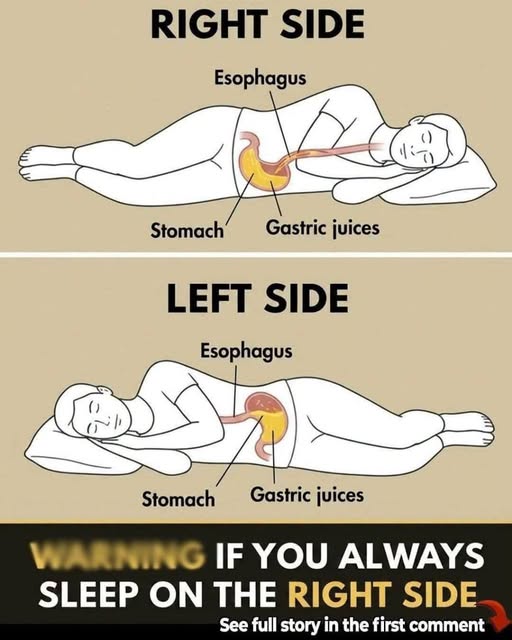
If you frequently experience heartburn or acid reflux, your sleeping position can make a difference.
For many people with reflux, lying on the left side is associated with less nighttime reflux than lying on the right side.
That’s because body position can influence how stomach contents move toward the esophagus.
If you regularly wake with burning in your chest, a sour taste, coughing, or regurgitation, consider discussing these symptoms with a healthcare professional.
3. Pregnancy Can Change the Advice
Pregnancy is one situation in which sleep position deserves particular attention.
As pregnancy progresses, many people find side sleeping more comfortable. Healthcare professionals may provide individualized advice about sleep position, particularly later in pregnancy.
If you’re pregnant, follow the recommendations of your obstetrician or midwife rather than general advice from social media.
Comfort also matters: pillows between the knees or supporting the abdomen can make side sleeping easier.
4. Your Shoulder and Hip May Need Support
Sleeping on one side places pressure on the shoulder and hip underneath you.
If you wake with:
- Shoulder pain
- Hip discomfort
- Arm numbness
- Neck stiffness
your sleep position or pillow setup may be contributing.
Try adjusting your pillow height so your neck remains relatively aligned with your spine. A pillow between your knees can also help some people maintain a more comfortable posture.
Persistent pain should be evaluated rather than simply blamed on your sleeping position.
5. Right-Side Sleeping Isn’t a Cure for Sleep Apnea
People with obstructive sleep apnea may be advised to avoid sleeping on their back because back sleeping can worsen airway obstruction in some individuals.
Side sleeping may help some people, but right-side sleeping isn’t a treatment that replaces proper evaluation or medical therapy.
If you snore loudly, wake up gasping or choking, stop breathing during sleep according to a bed partner, or feel excessively sleepy during the day, talk to a healthcare professional about possible sleep apnea.
6. Your Sleep Quality Matters More Than a “Perfect” Position
There is no universally perfect sleeping position.
If you sleep comfortably on your right side, wake refreshed, and don’t have symptoms related to your position, there may be no reason to force yourself to sleep differently.
A comfortable mattress, supportive pillow, appropriate room temperature, and consistent sleep schedule may have a much greater effect on your sleep quality than obsessing over whether you sleep on the right or left side.
7. Pay Attention to Symptoms Rather Than Internet Rules
Your body can give you useful clues.
If sleeping on your right side consistently causes or worsens:
- Heartburn
- Shortness of breath
- Shoulder or hip pain
- Numbness
- Significant discomfort
- Frequent nighttime awakening
try a different position and discuss persistent symptoms with a healthcare professional.
And remember: a sleeping position itself usually isn’t a diagnosis.
Should You Switch From the Right Side to the Left?
Not necessarily.
If you’re healthy and comfortable sleeping on your right side, you don’t need to switch simply because someone online says it’s harmful.
However, if you have nighttime acid reflux, experimenting with left-side sleeping may be worthwhile. People with specific medical conditions may also receive individualized recommendations from their healthcare team.
What You Should Have Beside You
If you prefer sleeping on your right side, a few simple tools can improve comfort:
A supportive pillow
Choose a pillow that keeps your head and neck reasonably aligned rather than pushing your head sharply upward or allowing it to fall toward the mattress.
A pillow between your knees
This can help some side sleepers feel more comfortable and reduce twisting through the hips and lower back.
A suitable mattress
A mattress that provides appropriate support while cushioning the shoulder and hip can make side sleeping more comfortable.
When Should You Talk to a Doctor?
Don’t ignore symptoms simply because they happen at night.
Seek medical advice if you regularly experience:
- Chest pain or pressure
- Significant shortness of breath when lying down
- Repeated nighttime choking or gasping
- Persistent severe heartburn
- Unexplained numbness or weakness
- Severe or worsening pain
Sudden chest pain, severe difficulty breathing, or sudden neurological symptoms require urgent medical attention.
Final Thoughts
Sleeping on your right side is not inherently unhealthy.
For most people, the best sleeping position is the one that allows them to sleep comfortably and consistently without causing symptoms.
However, certain conditions—particularly acid reflux, sleep apnea, pregnancy, and musculoskeletal pain—can make sleep position more important.
So if you always sleep on your right side, you don’t need to panic or force yourself into another position.
Listen to your body, optimize your sleep setup, and seek medical advice when persistent symptoms appear.