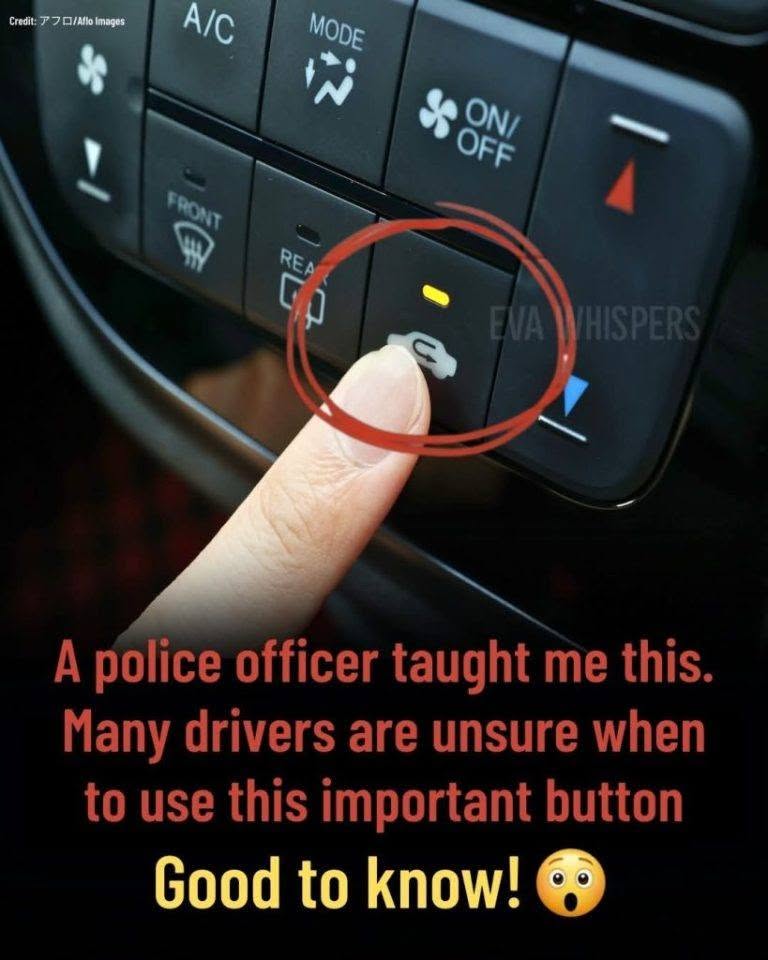
Most drivers know the basics on their dashboard: headlights, windshield wipers, air conditioning, hazard lights, and the radio controls.
But there is often one small button or symbol that drivers rarely think about until they suddenly need it.
Depending on the vehicle, that overlooked control may be the rear-window defroster, traction-control button, fog-light control, recirculation button, or another vehicle-specific function.
The important lesson is simple: a dashboard button is not necessarily decorative just because you rarely use it.
Modern vehicles can have dozens of controls, and their exact arrangement varies by make and model. NHTSA materials, for example, identify dashboard controls for functions including rear-window defrosting, traction control, fog lights, hazard warning lights, air conditioning, and more.
The Button You Rarely Touch May Be the One You Need Most
Think about the buttons you normally use.
You probably adjust the temperature, turn on the headlights, change the fan speed, or use the windshield wipers without giving them much thought.
But some controls are designed for specific situations rather than everyday driving.
That means you might go months without touching them.
Then one rainy, foggy, icy, or otherwise difficult morning, that small button suddenly becomes extremely useful.
The Rear-Window Defroster Is a Perfect Example
One commonly overlooked button is the rear-window defroster.
Its job is to help clear condensation, frost, or moisture from the rear glass so the driver can see through the back window more clearly.
NHTSA documentation identifies rear-window defrosting/defogging as a vehicle control and describes requirements concerning its identification and illumination.
This is especially useful when visibility is reduced by condensation.
Instead of repeatedly wiping the inside of the glass or waiting for the window to clear on its own, the vehicle’s defrosting system can help restore visibility.
Another Important One: Traction Control
Some vehicles also have a button that allows the driver to turn traction control on or off.
The symbol commonly resembles a car with curved skid marks underneath it, although the exact design can vary.
Traction-control systems are intended to help manage wheel spin under certain driving conditions.
If you see the traction-control symbol illuminated, don’t automatically assume it means the system is broken. In some vehicles, it may indicate that the system is operating, while a different warning or message may indicate that the system has been switched off or has detected a fault.
Because the meaning can differ between vehicles, the owner’s manual is the best source for your specific car.
Don’t Press an Unknown Button Just to See What Happens
This is one of the biggest mistakes drivers make.
If you don’t recognize a dashboard button, don’t assume it is harmless.
Some buttons control comfort features. Others can affect vehicle systems or visibility.
Instead, check your owner’s manual.
Vehicle manuals commonly include illustrations showing dashboard symbols and explaining what each control does. NHTSA-hosted owner manuals demonstrate how many different dashboard symbols and controls can appear in a single vehicle.
Pay Attention to Warning Lights, Too
Buttons aren’t the only dashboard features drivers sometimes ignore.
Warning lights deserve attention as well.
A red brake warning, airbag warning, overheating indication, or other serious warning should not simply be dismissed because the vehicle still seems to drive normally.
NHTSA materials identify important indicators such as brake-system warnings, ABS, airbag/SRS, engine temperature, battery charging, and malfunction indicators.
A dashboard warning is the car’s way of communicating that something may require attention.
Your Car’s Dashboard Is Basically a Communication System
The dashboard isn’t just there to make the interior look modern.
It communicates information about the vehicle and gives you access to systems designed for particular driving conditions.
Some controls may be used every day.
Others may only be needed occasionally.
And that’s exactly why drivers should know what they do before an emergency or difficult driving situation occurs.
Take Five Minutes to Learn Your Dashboard
The next time you’re parked safely at home, sit in your vehicle and look at the dashboard.
Check:
- What each unfamiliar button does
- What the major warning lights mean
- Where the hazard-light button is
- How to activate the front and rear defrosters
- How traction control is indicated
- What the fog-light symbols mean, if your car has them
- Where to find the owner’s manual
It only takes a few minutes, but that knowledge can make you a much more confident driver.
The Bottom Line
There isn’t one universal “secret dashboard button” that every driver ignores. Different cars have different controls and symbols.
The real mistake is not knowing what the buttons and warning lights in your own vehicle mean.
A button that seems unimportant today could become extremely useful when visibility drops, the windows fog up, or your vehicle’s warning system alerts you to a problem.
So before your next trip, take a few minutes to learn your dashboard.
And if you enjoy practical everyday tips like this, keep following along—we’ll keep sharing useful home, kitchen, cleaning, driving, and family-friendly tips, along with easy recipes you can actually make at home.
Meta Description: Discover why overlooked dashboard buttons matter, including rear-window defrost, traction control, fog lights, and other vehicle controls every driver should understand.