Many drivers focus on airbags, seat belts, and brakes but overlook smaller vehicle safety features. Learn which overlooked features deserve regular attention and how they can help keep you safer on the road.
Modern cars are packed with safety technology, yet many drivers rarely think about some of the simplest features designed to protect them.
When people talk about vehicle safety, they usually mention seat belts, airbags, anti-lock brakes, or electronic stability control. Those systems are extremely important, but there are other safety features that can quietly make a difference every time you drive.
One of the most overlooked is something remarkably simple: the vehicle’s head restraints, commonly called headrests.
Your Headrest Is More Than a Comfort Feature
Many people adjust their headrest based on comfort alone. Some even lower it because they prefer the appearance or want a clearer view through the rear window.
But the head restraint has an important safety purpose.
During a rear-end collision, your vehicle can move forward suddenly while your head and neck initially lag behind. This rapid movement can contribute to whiplash and other neck injuries.
A properly positioned head restraint helps limit excessive movement of the head and neck.
That’s why its position matters.
How Should a Head Restraint Be Positioned?
The exact adjustment varies by vehicle and seating position, but the general principle is simple:
The head restraint should be positioned to support the back of your head, rather than sitting far below it.
Ideally, the restraint should be close enough to your head to provide support during a crash.
Don’t assume the factory setting is automatically perfect for every driver. Different people have different heights and seating positions.
After adjusting your seat, check the head restraint again.
Another Commonly Overlooked Feature: Tire Pressure Monitoring
Your tires are one of the few parts of your vehicle constantly in contact with the road, yet tire pressure is surprisingly easy to ignore.
Many modern vehicles have a Tire Pressure Monitoring System (TPMS) that alerts the driver when one or more tires are significantly underinflated.
However, the warning light shouldn’t be treated as a replacement for regular checks.
Tire pressure can change with temperature, driving conditions, and slow leaks.
Underinflated tires can affect:
- Handling
- Braking
- Fuel economy
- Tire wear
- Vehicle stability
Check your tire pressure according to the vehicle manufacturer’s recommended specifications.
Don’t Ignore Your Mirrors
Mirrors might seem like ordinary equipment rather than safety technology, but proper adjustment can dramatically improve your awareness of surrounding traffic.
A poorly adjusted mirror can create larger blind spots.
Before driving, make sure:
- Your rearview mirror gives you a clear view behind the vehicle.
- Side mirrors are positioned to reduce blind spots.
- Your seating position allows you to use the mirrors without stretching or leaning.
Remember that mirrors cannot eliminate every blind spot. A quick visual check before changing lanes can still be necessary.
Hazard Lights Are Not Just for Emergencies
Your hazard warning lights can alert other road users that your vehicle is stopped or presenting an unusual hazard.
However, drivers should understand local laws regarding when hazard lights can legally be used while driving.
In general, don’t assume that turning on your hazards makes it safe to continue driving through dangerous conditions. If visibility is severely reduced or your vehicle has developed a serious problem, getting to a safe location is the priority.
Seat Belts Remain the Most Important Everyday Safety Feature
It’s easy to become distracted by newer technology and forget the most basic protection inside the car.
The seat belt should sit correctly across the body and remain properly fastened.
Don’t place the shoulder belt behind your back or under your arm. Don’t loosen it because you’re only traveling a short distance.
A short trip can still involve a serious crash.
Your Dashboard Warning Lights Are Safety Features Too
One of the most overlooked “features” in a car may actually be the information the vehicle gives you.
Warning lights are there for a reason.
A driver who becomes accustomed to ignoring warning indicators may miss an important mechanical or safety problem.
Pay particular attention to warnings involving:
- Brakes
- Engine temperature
- Oil pressure
- Airbags
- Tire pressure
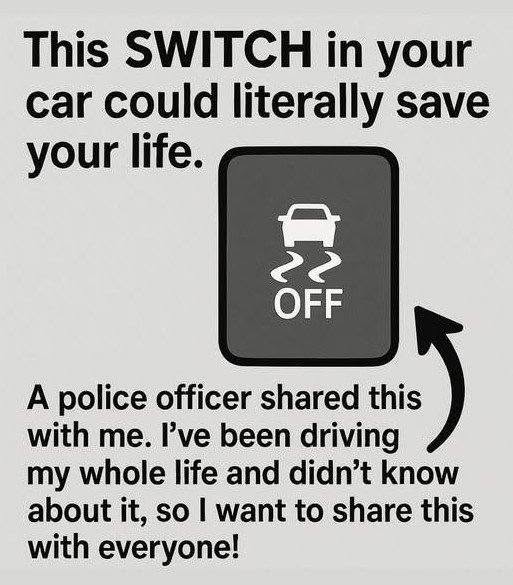
- Electronic stability control
- Battery/charging system
If a warning light appears, check the owner’s manual or have the vehicle inspected rather than simply resetting the warning.
Check Your Windshield Wipers and Defrosters
Visibility is a safety issue.
Worn windshield wipers can leave streaks that make it difficult to see during rain. A malfunctioning defroster can also become a serious problem when the windshield fogs.
Replace damaged or worn wiper blades and make sure your windshield-washing system works properly.
Keeping the windshield clean inside and outside can also improve visibility, particularly when sunlight hits the glass at an angle.
The Feature You Should Never “Set and Forget”
The biggest lesson is that many safety systems only work properly when they are correctly adjusted, maintained, and used.
A head restraint positioned incorrectly cannot provide the same protection as one adjusted for the occupant.
Likewise, an advanced safety system can’t compensate for badly worn tires, poor visibility, or an improperly fastened seat belt.
A Quick Safety Check Before Your Next Drive
Before setting off, take a few seconds to check:
Seat: Is it positioned comfortably so you can control the vehicle?
Head restraint: Is it adjusted to support your head and neck?
Seat belt: Is it properly fastened and positioned?
Mirrors: Can you clearly see behind and beside the vehicle?
Tires: Do they appear properly inflated and undamaged?
Windshield: Is your view clear?
Dashboard: Are there warning lights that need attention?
These checks take very little time but can help prevent small problems from becoming bigger ones.
Final Thoughts
Car safety isn’t always about the newest technology or the biggest feature advertised by manufacturers.
Sometimes, an ordinary component that drivers barely notice can have an important safety role.
Your head restraint is a perfect example. It’s easy to think of it as part of the seat’s comfort system, but its position can matter during certain collisions.
So the next time you get into your car, don’t simply adjust the seat and drive away. Take a moment to check your head restraint, seat belt, mirrors, tires, and dashboard warnings.
The safest car is not necessarily the one with the most features—it’s the one whose safety features are properly used and maintained.