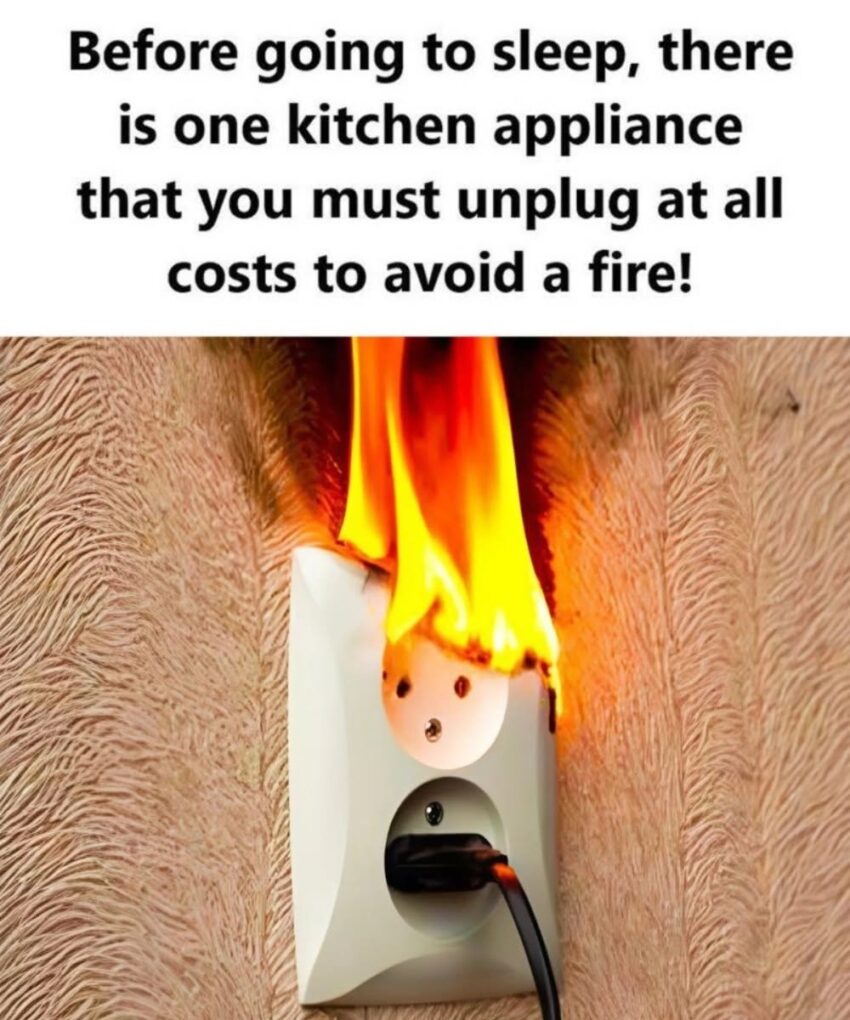
It may be one of the smallest appliances in your kitchen, but leaving it plugged in overnight can create an unnecessary fire risk.
A toaster is designed to heat up quickly and can reach extremely high temperatures. Although modern toasters have safety features, electrical faults, damaged cords, trapped crumbs, or overheating can still create a fire hazard.
That doesn’t mean every plugged-in toaster is going to cause a fire. But unplugging it after use is a simple precaution that costs nothing and takes only a few seconds.
Why Should You Unplug a Toaster?
Toasters contain heating elements that become extremely hot during operation. Crumbs and food particles can accumulate inside the appliance over time.
If a fault occurs—or if combustible material comes into contact with a hot component—the risk of smoke or fire can increase.
Unplugging the toaster when you’re finished using it removes its connection to the electrical supply.
The safest habit is simple: use it, switch it off, let it cool, and unplug it.
Never Leave a Toaster Running Unattended
One of the biggest mistakes is putting bread in the toaster and walking away.
Even if you’re only stepping into another room, it’s better to stay nearby while an appliance containing exposed heating elements is operating.
If bread becomes stuck, don’t insert a knife, fork, or other metal object into the toaster while it is plugged in.
Unplug the appliance first and allow it to cool before attempting to remove anything.
Keep the Toaster Away From Flammable Items
Where you place the toaster matters.
Keep it away from:
- Paper towels
- Kitchen towels
- Curtains
- Wooden items
- Food packaging
- Plastic containers
- Other heat-sensitive materials
Make sure the toaster has adequate space around it and isn’t positioned directly underneath cabinets or shelves that could be affected by heat.
Clean Out the Crumbs
A toaster full of crumbs isn’t just messy—it can also increase the amount of combustible material inside the appliance.
Follow the manufacturer’s instructions for cleaning.
Many toasters have a removable crumb tray. Empty it regularly and make sure the appliance is unplugged before cleaning.
Never pour water into a toaster or immerse it in water.
Don’t Use a Damaged Toaster
Inspect the toaster and its power cord from time to time.
Stop using it if you notice:
- Frayed or damaged wiring
- A cracked plug
- Burning smells
- Sparks
- Smoke when it isn’t normally expected
- Repeated electrical tripping
- Signs of overheating
- A malfunctioning switch or control
Don’t attempt to repair a damaged electrical appliance yourself unless you’re qualified to do so.
Replacing a small appliance is much safer than continuing to use one that shows signs of electrical damage.
What About Other Kitchen Appliances?
The toaster isn’t the only appliance worth thinking about.
Depending on the appliance and manufacturer’s instructions, extra caution may also be appropriate with devices such as:
- Toaster ovens
- Portable electric grills
- Air fryers
- Electric kettles
- Coffee makers
- Slow cookers
- Portable hot plates
Some appliances are specifically designed for longer periods of operation, while others are not.
Always follow the manufacturer’s instructions rather than assuming every appliance should be treated the same way.
Don’t Overload an Outlet
Another common kitchen safety problem is plugging too many appliances into one outlet or power strip.
High-powered appliances can draw substantial electrical current. Overloading an outlet, extension cord, or power strip can cause overheating.
Avoid using damaged extension cords, and don’t use a power strip as a substitute for an appropriate electrical outlet for a high-power appliance.
If an outlet repeatedly becomes hot, sparks, smells burnt, or trips the circuit breaker, have it inspected by a qualified electrician.
A Simple Nighttime Kitchen Check
Before going to bed, take a few seconds to look around the kitchen.
Check:
1. Toaster: Unplugged and clear of crumbs.
2. Stove: Burners and oven switched off unless intentionally left operating according to the appliance’s instructions.
3. Small appliances: Unplug unnecessary appliances.
4. Cords: No fraying, melting, or exposed wires.
5. Countertops: Towels, paper, and packaging kept away from heat sources.
6. Outlets: No signs of burning, overheating, or sparking.
This takes less than a minute but can become a valuable safety habit.
One More Important Rule
If a kitchen appliance catches fire, do not throw water onto an electrical fire.
If it is safe to do so, disconnect the power without putting yourself in danger, leave the area, and call your local emergency service. If the fire is spreading or you cannot safely control it, evacuate immediately.
Having working smoke alarms in appropriate locations throughout the home and knowing your household’s fire-escape plan are also essential parts of fire safety.
The Bottom Line
The toaster is one kitchen appliance worth unplugging when you’re finished using it, especially before going to bed.
It’s not because every plugged-in toaster is inherently dangerous. Rather, unplugging eliminates the electrical connection and is a simple precaution against potential faults, overheating, or other problems.
Keep it clean, don’t use damaged appliances, keep flammable materials away, and never put metal objects inside a plugged-in toaster.
A few seconds of prevention at night can be a worthwhile addition to your household fire-safety routine.