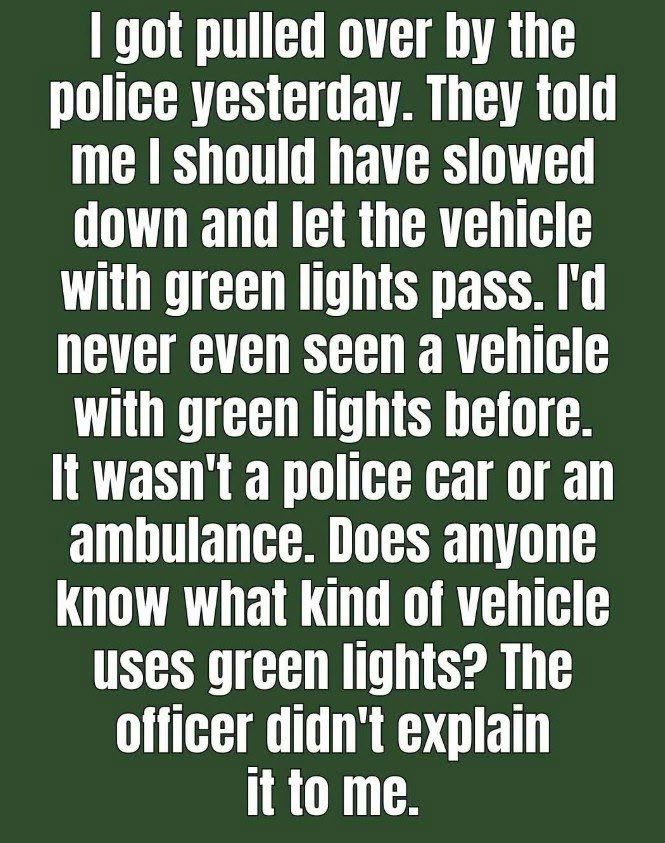
Have you ever noticed a car with a green light or green flashing beacon? Learn what these lights may indicate, why drivers should respond carefully, and how yielding can sometimes be a simple act of compassion.
Have you ever been driving at night and noticed a vehicle displaying a green light that seemed different from the usual headlights, brake lights, or turn signals?
For many drivers, seeing an unfamiliar colored light on another vehicle immediately raises questions. Does it mean the vehicle belongs to an emergency service? Is the driver responding to a special situation? Should other motorists move out of the way?
The answer is not always as simple as a single universal rule.
The meaning of a green vehicle light can vary significantly depending on the country, state, province, local traffic regulations, and type of vehicle. In some places, green lights are associated with specific authorized vehicles or emergency-related services, while in other areas they may have a completely different meaning.
That’s why understanding the context is more important than assuming every green light means the same thing.
Why Do Some Vehicles Have Green Lights?
Vehicle lighting systems are generally designed to communicate information to other road users.
Drivers are already familiar with common signals:
- Red lights usually indicate braking or the rear of a vehicle.
- Amber or yellow lights are commonly used for warnings or indicators.
- White lights are generally associated with headlights, reversing, or illumination.
- Blue and red lights are often associated with emergency services in many jurisdictions.
- Green lights may have specific meanings depending on local regulations.
A green beacon or flashing green light is therefore not necessarily decorative. If it is installed on an authorized vehicle, it may be intended to communicate a particular status or role.
However, there is no worldwide rule that says every vehicle with a green light has the same purpose.
Green Lights Can Have Different Meanings
One of the most important things to understand is that traffic-light colors are regulated locally.
A green light on a vehicle could be associated with a particular emergency, volunteer, official, utility, security, or other authorized function depending on where you live.
For example, certain jurisdictions may permit specific organizations or specialized vehicles to use green warning lights.
In another location, the same color may not carry any special legal meaning at all.
This is why social-media posts claiming that a green light always means one particular thing should be treated carefully.
Should You Automatically Pull Over?
Not necessarily.
If you see a vehicle displaying a green light, don’t make a sudden maneuver simply because of the color.
Instead:
- Stay calm.
- Observe the vehicle’s movement.
- Check whether it is approaching you quickly.
- Look for additional warning lights or markings.
- Follow the traffic rules applicable in your location.
- Give way when required or when doing so can be done safely.
If the vehicle appears to be responding to an emergency or performing an important road-related task, allowing it to pass when safe can be a considerate choice.
Why Yielding Can Be an Act of Compassion
Sometimes yielding is more than simply following a traffic rule.
Imagine that the driver behind you is trying to reach someone who urgently needs assistance.
You may never know what is happening inside that vehicle.
The person could be:
- Responding to an emergency
- Helping someone who is injured
- Providing essential services
- Traveling to assist another person
- Performing an important public-safety duty
A few seconds of patience can sometimes make a meaningful difference.
Of course, compassion on the road should never mean putting yourself or someone else in danger.
The safest approach is always to yield only when you can do so legally and safely.
Don’t Make Sudden or Dangerous Moves
One common mistake drivers make when they notice unusual lights is reacting too quickly.
A sudden lane change, hard braking, or pulling onto an unsafe shoulder can create a new hazard.
If you need to give way, signal clearly and move only when there is enough space.
Other drivers may not have noticed the vehicle, so predictable driving is especially important.
What If You Don’t Know What the Green Light Means?
If you are unfamiliar with the meaning of a particular vehicle light, don’t guess.
Traffic-light regulations can differ between jurisdictions.
Check your local highway or transportation authority’s rules, particularly if you frequently encounter vehicles using unusual warning lights.
The vehicle may also have visible markings identifying the organization or service it belongs to.
Green Doesn’t Always Mean Emergency
This is an important distinction.
A green light should not automatically be interpreted as proof that the vehicle is responding to an emergency.
Some vehicles may legally use colored warning lights for specific operational purposes without being involved in a life-threatening situation.
Likewise, an unauthorized vehicle could potentially be displaying a light illegally.
Therefore, drivers should respond to the overall situation, not simply the color of a light.
What Should Other Drivers Do?
When encountering a vehicle with unusual warning lights, the best general approach is:
Stay Alert
Pay attention to the vehicle’s position and movement.
Avoid Blocking It
If it is clearly attempting to pass and you can safely allow it through, avoid unnecessarily obstructing its path.
Use Your Indicators
If you change lanes or move toward the side of the road, communicate your intention to other drivers.
Don’t Speed Up to Stay Ahead
Trying to race ahead of a vehicle displaying warning lights can create unnecessary danger.
Don’t Follow Closely
If the vehicle is responding to an emergency, following behind it closely can be dangerous and may interfere with its work.
A Little Patience Can Go a Long Way
Road safety isn’t only about knowing traffic laws. It is also about recognizing that every vehicle contains a person with circumstances we may not know.
A driver may be rushing somewhere for a reason you cannot see.
A service vehicle may be working to protect someone.
An emergency responder may be trying to reach a location as quickly as possible.
You don’t always need to know the entire story before choosing to be considerate.
When it is safe and legal to do so, giving another driver space can be a simple act of courtesy.
Be Careful With Viral Traffic Claims
Unusual vehicle lights often become the subject of viral social-media posts.
You may see claims such as:
“If you see this color light, you must immediately pull over.”
But traffic laws are not universal.
The exact meaning of a colored vehicle light depends on the jurisdiction and the vehicle’s authorization.
Before sharing a traffic claim, check whether it applies to your country, state, or province.
Frequently Asked Questions
Does a green light on a car always mean an emergency?
No. The meaning varies according to local laws and the type of vehicle using the light.
Should I immediately pull over if I see a green vehicle light?
Don’t make a sudden maneuver. Observe the situation and follow your local traffic rules. If you can safely give way when appropriate, do so.
Can private vehicles use green warning lights?
Rules vary by jurisdiction. Some types of warning lights may be restricted to authorized vehicles or specific purposes.
Why is yielding important?
Yielding can help keep traffic moving safely and may allow an authorized or emergency-related vehicle to reach its destination more efficiently.
What is the safest response to an unfamiliar vehicle light?
Stay calm, avoid sudden movements, observe the vehicle, and follow the traffic laws applicable where you are driving.
Final Thoughts
A green light on a vehicle can certainly catch your attention, but its meaning isn’t universal.
Rather than assuming that every green light represents the same situation, drivers should consider their local traffic laws and the circumstances around the vehicle.
Most importantly, safe driving requires patience and awareness.
If another driver or service vehicle appears to need space, giving way when it is safe and legal can be a small gesture that makes the road safer for everyone.
Sometimes compassion on the road doesn’t require knowing the whole story. It simply means giving another person a little room when you safely can.