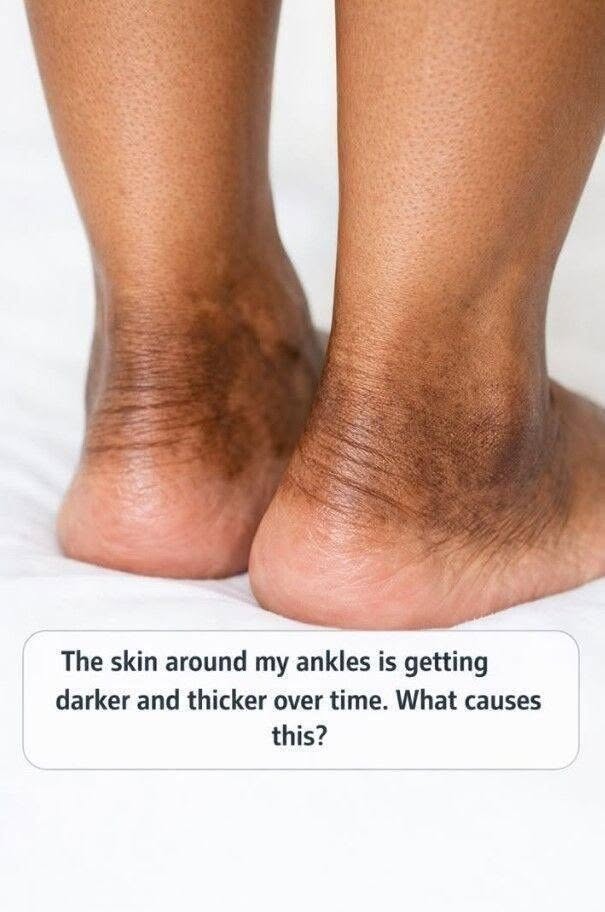
Have you noticed that the skin around your ankles is gradually becoming darker, rougher, or thicker than it used to be? Perhaps the change started as a small patch of discoloration and slowly became more noticeable over several months or years.
At first, you might think it is simply dry skin, aging, or a harmless change in pigmentation. However, when the skin around your ankles becomes darker and thicker over time, it may be your body’s way of signaling an underlying skin condition or circulation problem.
Although these changes are not always serious, they should not be ignored, especially if they occur alongside swelling, itching, pain, or changes in the appearance of your lower legs.
Let’s explore some possible causes, the warning signs to watch for, and when you should seek medical advice.
1. Poor Blood Circulation May Be One Possible Cause
One common reason for darkening skin around the ankles is a condition known as chronic venous insufficiency.
Your leg veins carry blood back toward your heart. When the valves inside these veins do not work properly, blood can collect in the lower legs instead of flowing upward efficiently. This can increase pressure in the veins and allow fluid and blood-related pigments to accumulate in the surrounding tissues.
Over time, this may cause the skin around the ankles to develop a brownish or reddish-brown appearance. The skin may also become itchy, swollen, dry, or thickened.
Some people notice that their ankles swell more after standing or sitting for long periods and improve somewhat after resting with their legs elevated.
If you have noticed gradually darkening skin along with ankle swelling, heaviness, or visible varicose veins, it is worth arranging a medical assessment. Identifying circulation problems early can help prevent further skin damage and complications.
2. Chronic Eczema and Repeated Scratching Can Darken the Skin
Another possible explanation is chronic eczema or dermatitis.
When the skin becomes irritated or inflamed repeatedly, it may start to itch. Scratching can then damage the skin further, leading to a cycle of irritation, inflammation, and thickening.
Over time, the affected area may become rough, leathery, scaly, or darker than the surrounding skin. This thickening is sometimes called lichenification, while the lingering discoloration may be known as post-inflammatory hyperpigmentation.
Several factors can contribute to these changes, including dry skin, irritating soaps, certain footwear materials, allergies, and repeated friction.
If your ankle skin is itchy, dry, or irritated, using a gentle, fragrance-free moisturizer may help protect the skin barrier. Try to avoid scratching and harsh products that could worsen irritation.
However, persistent thickening or discoloration should be assessed by a healthcare professional, particularly if the affected area continues to spread.
3. Diabetes and Insulin Resistance May Be Relevant
Changes in skin color and texture can sometimes be associated with metabolic conditions such as insulin resistance or diabetes.
One skin condition linked to insulin resistance is called acanthosis nigricans. It typically produces darker, thicker, velvety patches, especially around the neck, armpits, and groin.
Although ankle-only darkening is not the typical presentation of acanthosis nigricans, diabetes may contribute to other problems affecting the skin, circulation, and wound healing.
If you have noticed increased thirst, frequent urination, unexplained fatigue, or slow-healing wounds alongside your skin changes, speak with your healthcare professional about whether blood glucose testing is appropriate.
It is important to remember that darkened ankle skin alone does not mean you have diabetes. A proper assessment is needed to determine the underlying cause.
4. Friction, Footwear, and Contact Dermatitis Can Also Play a Role
Sometimes, the explanation is more local.
Repeated rubbing from shoes, socks, straps, or other materials can irritate the skin around the ankles. Certain fragrances, creams, detergents, or dyes may also trigger contact dermatitis in susceptible individuals.
When inflammation occurs repeatedly, the skin can become thicker and darker as it heals.
You may notice that the changes are concentrated where your footwear touches the skin or where a strap repeatedly rubs against the ankle.
Consider avoiding products that appear to trigger irritation and choose comfortable footwear that does not rub against the affected area. A fragrance-free moisturizer may also help if the skin is dry.
If the problem persists despite avoiding potential irritants, a clinician can examine the area and determine whether additional treatment or testing is needed.
5. Why Are the Changes Happening Gradually?
When skin darkening and thickening develop slowly, the underlying process may also be chronic.
For example, persistent vein pressure can gradually cause pigmentation and changes in skin texture. Repeated inflammation can leave behind darker patches even after the original irritation has improved.
The location and pattern of the changes can offer useful clues. Brown discoloration around both ankles accompanied by swelling may suggest a vein-related problem, while an itchy, scaly patch in an area exposed to friction may be more consistent with dermatitis.
However, appearance alone cannot establish a diagnosis. Several conditions can look similar, and more than one may be present at the same time.
A healthcare professional may examine your skin, check for swelling and circulation problems, review your medical history, and recommend further tests if needed.
6. When Should You See a Doctor?
If the skin around your ankles is becoming progressively darker or thicker, arrange a medical appointment rather than assuming it is simply a cosmetic issue.
Seek assessment particularly if you notice:
- Persistent swelling around your ankles or lower legs.
- Itching, redness, scaling, or increasing skin thickness.
- Varicose veins or a heavy feeling in your legs.
- Cracks, open sores, or wounds that heal slowly.
- Changes that continue to spread or worsen.
Seek urgent medical attention if one leg suddenly becomes swollen, painful, warm, or red. If you also experience chest pain or sudden shortness of breath, seek emergency care.
If you develop an open sore, signs of infection, or rapidly worsening skin changes, obtain prompt medical assessment.
7. What Can You Do to Protect Your Skin?
Although treatment depends on the cause, a few practical measures can help protect the affected area.
Moisturize regularly. Apply a gentle, fragrance-free moisturizer to dry skin to help maintain its protective barrier.
Avoid scratching. Repeated scratching can worsen inflammation and contribute to further thickening and discoloration.
Choose comfortable footwear. Avoid shoes, socks, or straps that repeatedly rub against the affected area.
Pay attention to swelling. If your ankles swell regularly, discuss this with a healthcare professional. Leg elevation may help some people with vein-related swelling, but it does not replace medical evaluation.
Avoid unprescribed skin-lightening creams. Strong steroid creams or products containing potentially harmful ingredients may cause additional skin problems if used incorrectly.
Follow up on persistent changes. If the discoloration continues to progress, professional assessment can help identify the cause and determine whether treatment is needed.
Final Thoughts: Listen to What Your Skin Is Telling You
Darkening and thickening skin around the ankles can develop for several reasons, including vein-related circulation problems, chronic eczema, repeated friction, and certain metabolic conditions.
The most important step is to look beyond the color change and pay attention to other symptoms, such as swelling, itching, pain, or changes in skin texture.
Although these changes are not always a sign of a serious illness, gradual progression deserves attention. Identifying the underlying cause can help you receive appropriate treatment and reduce the risk of complications.
Your skin can provide valuable clues about your health. If the area around your ankles continues to darken or thicken, do not simply cover it up or ignore it. Arrange a medical assessment to understand what is causing the change.
Medical disclaimer: This article is intended for general educational purposes and does not replace professional medical advice, diagnosis, or treatment. Consult a qualified healthcare professional for persistent or worsening skin changes.