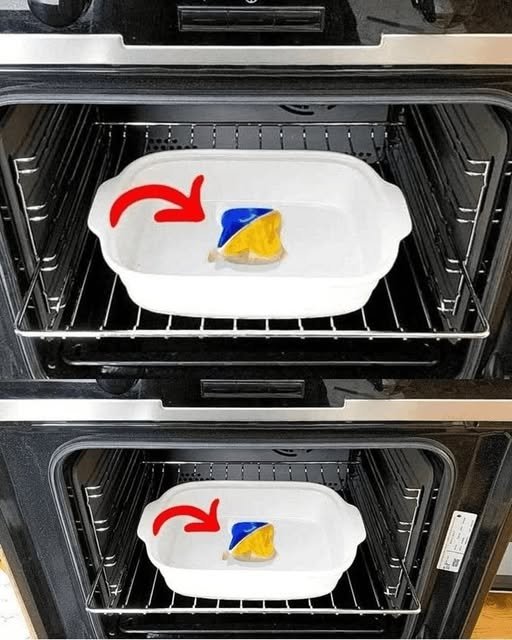
easy way to clean a dirty oven without hours of scrubbing. This simple oven-cleaning method can help loosen baked-on grease, food residue, and stubborn burnt-on messes.
The Trick to Cleaning the Oven “Effortlessly” — Even Burnt-On Grease Can Be Easier to Remove
Cleaning the oven is one of those household chores that most people tend to put off. Grease splatters, spilled sauces, crumbs, and baked-on food can quickly turn into a stubborn layer of grime that seems almost impossible to remove.
The good news is that you don’t always need to spend hours aggressively scrubbing.
A simple combination of heat, moisture, and a suitable cleaning solution can help soften stubborn residue first, making the actual cleaning much easier.
Why Oven Dirt Becomes So Difficult to Remove
Fresh spills are usually relatively easy to wipe away. The problem begins when food and grease are repeatedly exposed to high temperatures.
Over time, the residue becomes baked onto the oven’s surfaces. Each time the oven is used, the buildup can become harder and darker.
That’s why trying to scrub everything while it is completely dry often feels like an endless job.
The key is to loosen the buildup before scrubbing.
The Easy Steam Method
One of the simplest approaches is to use steam to soften grease and food residue.
What You Need
- An oven-safe baking dish or tray
- Warm water
- A small amount of dish soap
- A microfiber cloth or sponge
- A non-abrasive scrubber for stubborn areas
- Rubber gloves
Step 1: Remove the Oven Racks
Take out the racks and set them aside.
Cleaning the racks separately gives you much better access to the oven walls and bottom.
Step 2: Add Warm Water to a Baking Dish
Pour warm water into an oven-safe dish.
For greasy buildup, you can add a small amount of dishwashing liquid.
Do not use a large amount of soap because excessive foam is unnecessary.
Step 3: Heat the Oven Briefly
Place the dish inside the oven and heat it at a low temperature for a short period.
The goal is to create moisture and steam—not to bake the cleaning solution.
Turn the oven off afterward and allow it to cool until it is safe to touch.
Never leave an oven unattended while heating, and follow your oven manufacturer’s instructions.
Step 4: Let the Steam Work
Allow the warm, moist environment to sit for a while.
The moisture can help soften dried food particles and grease, making them easier to wipe away.
This is especially useful when the oven has accumulated several layers of residue.
Step 5: Wipe the Interior
Once the oven is safely cool but still slightly warm, use a damp microfiber cloth or sponge to wipe the surfaces.
Start with the easiest areas and work toward the more stubborn spots.
You may notice that residue that previously required heavy scrubbing now comes away much more easily.
What About Really Burnt-On Areas?
For extremely stubborn spots, you may need additional cleaning rather than relying on steam alone.
A commercially formulated oven cleaner can be effective when used exactly according to its label.
Always check whether the product is suitable for your particular oven and surface.
For lighter buildup, a paste made from baking soda and water is sometimes used as a gentle cleaning option. Apply it to suitable oven surfaces, allow it to sit, and then wipe thoroughly.
Avoid abrasive tools that can scratch surfaces.
Don’t Forget the Oven Door
The glass door can collect a surprising amount of grease.
Use a suitable glass or oven-safe cleaning method recommended by the manufacturer.
Avoid pouring liquid directly into vents, seals, switches, or electrical components.
For baked-on residue, gently loosen it rather than attacking the glass with a harsh abrasive.
How to Clean the Oven Racks
Place removable racks in a suitable container or bathtub lined with an old towel.
Cover them with warm water and add dish soap.
Let them soak before gently scrubbing away softened grease and residue.
Rinse them thoroughly and dry them completely before returning them to the oven.
Important Things You Should Never Do
Some cleaning shortcuts can actually damage your oven.
Avoid:
- Mixing different cleaning chemicals
- Mixing bleach with other cleaners
- Using harsh abrasive materials on delicate surfaces
- Spraying cleaner directly into electrical components or vents
- Using products that aren’t approved for your oven
- Cleaning a hot oven with cold water
- Ignoring the manufacturer’s cleaning instructions
Never mix cleaning chemicals. Some combinations can produce dangerous fumes.
How Often Should You Clean Your Oven?
You don’t necessarily need a deep clean every week.
A quick wipe after significant spills can prevent residue from becoming heavily baked on.
A deeper cleaning every few months—or more often if you cook frequently—can make the job much easier.
The biggest trick is not allowing layers of grease and food residue to accumulate for too long.
The Bottom Line
The secret to making oven cleaning feel “effortless” is to loosen the grime before you start scrubbing.
Steam and moisture can help soften baked-on residue, while an appropriate oven-cleaning product can tackle more stubborn buildup.
Instead of spending an entire afternoon attacking a completely dry, greasy oven, give the residue time to soften first. You’ll often find that the cleaning process becomes considerably easier.
Always check your oven’s manufacturer’s instructions before using any cleaning method or chemical product.