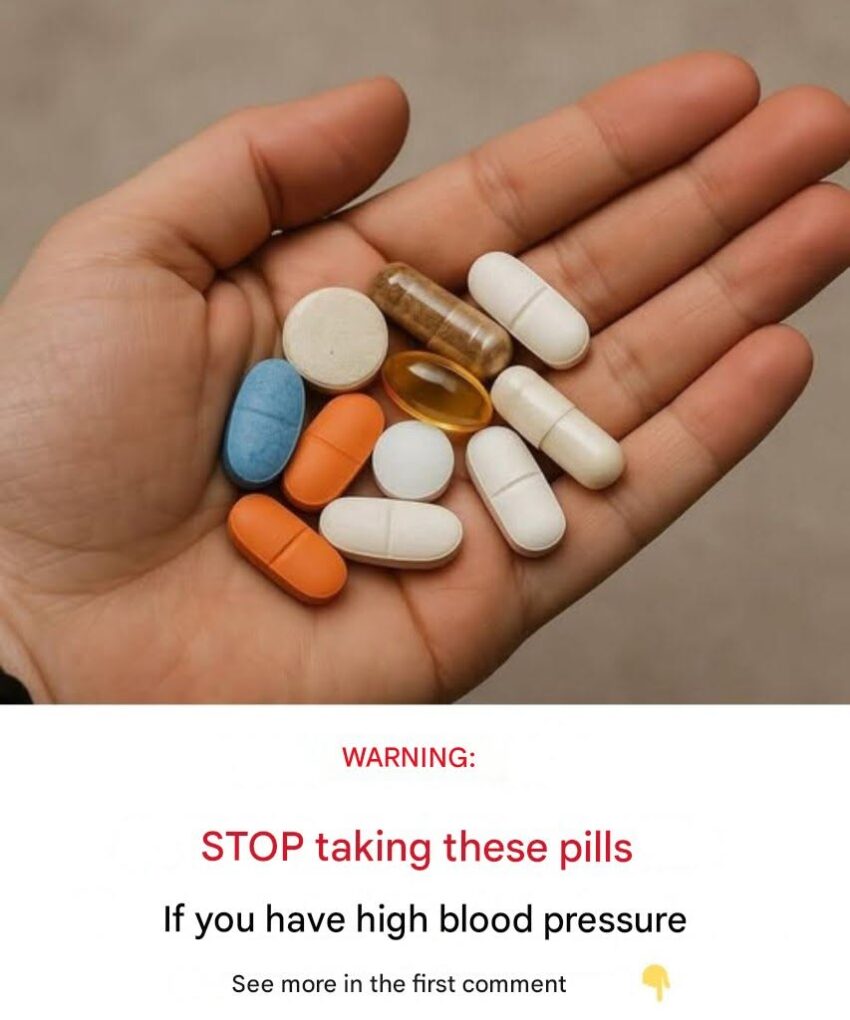
If you have high blood pressure, it’s important to know that some medicines and over-the-counter products can potentially raise blood pressure or interfere with blood-pressure treatment.
However, never stop a prescribed medication suddenly unless your doctor tells you to. Abruptly stopping some medicines can cause serious problems.
1. Some Pain Relievers
Certain NSAID pain relievers, such as ibuprofen and naproxen, may increase blood pressure in some people and can also affect kidney function.
What to do: Ask your doctor or pharmacist which pain reliever is appropriate for you, especially if you have hypertension or kidney problems.
2. Decongestant Pills
Some cold and allergy medicines contain decongestants such as pseudoephedrine or phenylephrine. These can raise blood pressure in some people.
What to do: Check the active ingredients and ask a healthcare professional before using them if you have high blood pressure.
3. Some Steroid Medicines
Certain corticosteroids can cause fluid retention and may increase blood pressure, particularly with longer use or higher doses.
What to do: If you have been prescribed steroids, follow your doctor’s instructions and don’t discontinue them suddenly without medical guidance.
4. Some Stimulant Medicines
Certain prescription medicines that stimulate the nervous system can affect heart rate and blood pressure.
What to do: Tell your healthcare professional that you have hypertension so your treatment can be monitored appropriately.
5. Herbal and Dietary Products
Some supplements and herbal products can affect blood pressure or interact with prescribed medicines. “Natural” does not automatically mean risk-free.
What to do: Tell your doctor or pharmacist about all supplements you take.
Don’t Stop Your Blood-Pressure Medicine on Your Own
If you take medication prescribed for hypertension, do not stop taking it because of a warning online. Contact your doctor or pharmacist first. They can determine whether a medicine is appropriate for you and whether an alternative is needed.
When to Seek Emergency Help
If your blood pressure is extremely high and you have chest pain, severe shortness of breath, weakness or numbness, difficulty speaking, confusion, or sudden vision changes, seek emergency medical care.
The Bottom Line
Some medicines can raise blood pressure or interfere with hypertension treatment, but the right response is not to stop medication suddenly. Review your medicines regularly with a healthcare professional and always check before starting a new over-the-counter medicine or supplement.