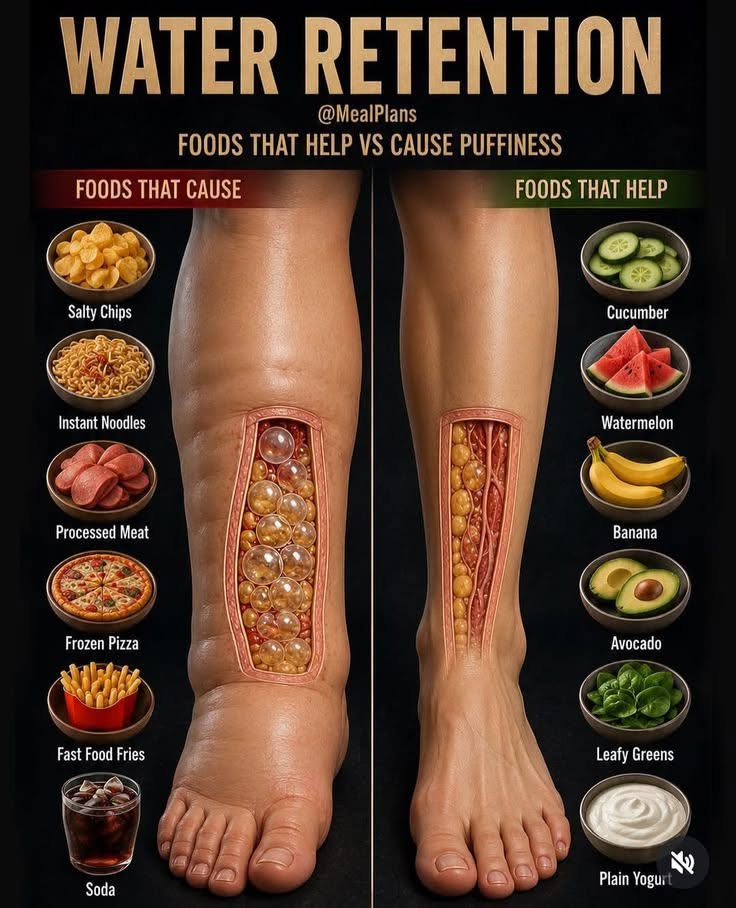
Water retention, also called fluid retention or edema, happens when excess fluid builds up in the body’s tissues. It can sometimes make the feet, ankles, hands, face, or abdomen appear swollen or puffy.
The good news is that everyday eating habits can play a role in maintaining a healthy fluid balance. The infographic above highlights foods commonly associated with increased puffiness, such as salty chips, instant noodles, processed meats, frozen pizza, fast-food fries, and soda, alongside foods such as cucumber, watermelon, bananas, avocado, leafy greens, and plain yogurt.


What Causes Water Retention?
Several factors can contribute to temporary water retention. A diet high in sodium (salt) is one of the most common dietary contributors. Sodium helps regulate fluid in the body, but consuming too much can cause the body to retain additional water.
Other factors can include:
- Eating a lot of highly processed foods
- Sitting or standing for long periods
- Hormonal changes
- Hot weather
- Certain medications
- Some underlying health conditions
- Dehydration in some circumstances
Occasional mild puffiness is often temporary, but persistent or unexplained swelling deserves medical attention.
Foods That May Contribute to Puffiness
1. Salty Chips
Potato chips and similar snacks can contain substantial amounts of sodium. Eating them frequently or in large portions may contribute to temporary fluid retention.
2. Instant Noodles
Instant noodles are convenient, but their seasoning packets can be particularly high in sodium. Choosing lower-sodium alternatives or using less of the seasoning can help reduce sodium intake.
3. Processed Meats
Processed meats such as sausages, deli meats, and similar products can contain significant amounts of sodium. Eating them less frequently can be part of a lower-sodium eating pattern.
4. Frozen Pizza
Many commercially prepared pizzas contain considerable sodium from processed meats, cheese, sauces, and the crust.
5. Fast-Food Fries
French fries themselves may contain sodium, and restaurant portions can make it easy to consume more salt than intended.
6. Soda
Sugary soft drinks don’t directly cause water retention in everyone, but frequent consumption can contribute to an overall less nutritious dietary pattern. Water is generally a better choice for everyday hydration.
Foods That Can Support a Healthy Fluid Balance
Cucumber
Cucumber has a high water content and can be an easy addition to salads, sandwiches, and snacks. It can help contribute to your overall daily fluid intake.
Watermelon
Watermelon is another water-rich fruit that can be refreshing, particularly during hot weather. It also provides potassium and other nutrients.
Bananas
Bananas provide potassium, an essential mineral involved in fluid and electrolyte balance. Including potassium-rich foods as part of a balanced diet may be helpful for overall electrolyte regulation.
Avocado
Avocado provides potassium, fiber, and healthy unsaturated fats. It can be added to toast, salads, sandwiches, or meals.
Leafy Greens
Spinach and other leafy greens provide potassium, magnesium, folate, fiber, and other nutrients. Adding a variety of vegetables to your diet supports overall nutrition.
Plain Yogurt
Plain yogurt can provide protein, calcium, and potassium. Choosing unsweetened varieties can be a simple way to include yogurt without adding large amounts of added sugar.
Don’t Forget About Hydration
It may seem counterintuitive, but drinking enough water is important for maintaining normal fluid balance. If you’re thirsty, choosing water instead of sugary drinks can be a simple improvement.
You don’t necessarily need special “detox” drinks or supplements to manage ordinary day-to-day puffiness.
Simple Ways to Reduce Excess Sodium
Try these practical swaps:
| Instead of | Try |
|---|---|
| Salty chips | Unsalted nuts or fresh fruit |
| Instant noodles | Homemade noodles with vegetables |
| Processed meats | Fresh chicken, fish, beans, or lentils |
| Frozen pizza | Homemade pizza with fresh ingredients |
| Fast-food fries | Roasted potatoes with herbs |
| Sugary soda | Water, sparkling water, or unsweetened drinks |
Important: When Swelling Shouldn’t Be Ignored
Food isn’t always the explanation for swelling. Sudden, severe, persistent, or unexplained swelling can sometimes be associated with an underlying medical problem.
Seek medical advice if swelling is significant, keeps returning, or occurs with symptoms such as shortness of breath, chest pain, severe pain, or swelling that’s mainly affecting one leg.
Final Thoughts
Managing water retention isn’t about eliminating one particular food. A better approach is to focus on an overall balanced diet, stay adequately hydrated, eat plenty of fruits and vegetables, and avoid regularly consuming large amounts of highly processed, high-sodium foods.
The foods shown in the infographic can be useful examples, but no single food will magically “flush out” water retention. Your overall eating pattern and individual health circumstances matter much more.
Disclaimer: This article is for general educational purposes and isn’t a substitute for medical advice or diagnosis. Persistent or significant swelling should be evaluated by a healthcare professional.