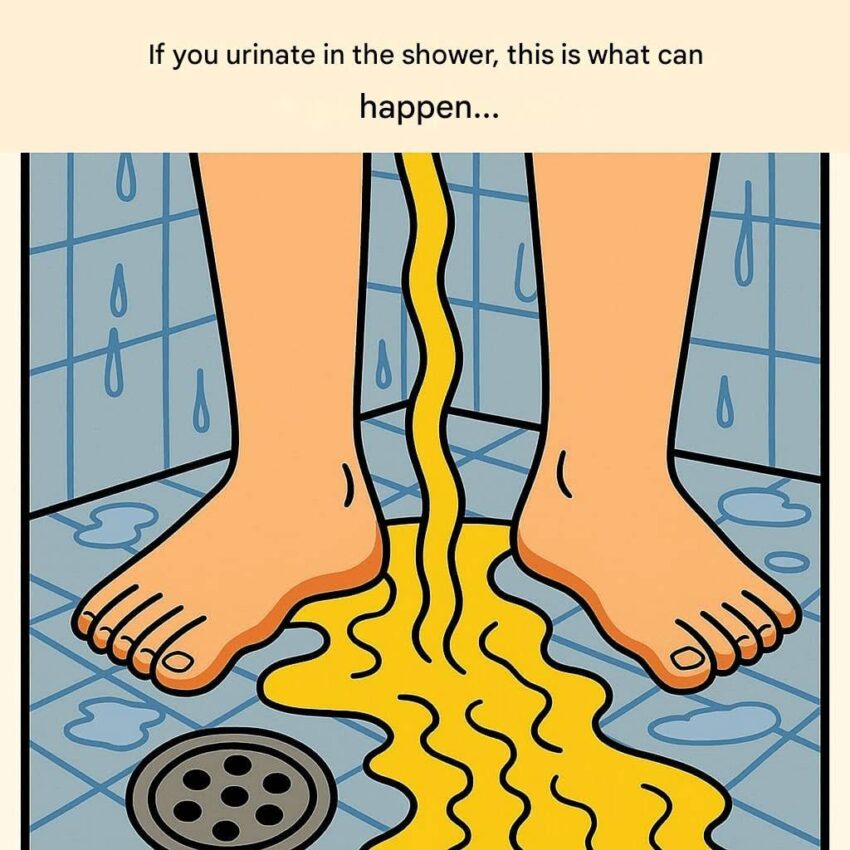
Peeing in the shower is one of those everyday habits people rarely talk about. Some people consider it harmless, while others think it is unhygienic.
So what actually happens if you pee in the shower?
For most healthy adults, occasionally urinating in the shower is unlikely to cause a health problem. But there are a few things worth knowing before making it a regular habit.
1. The Urine Goes Down the Drain
The most obvious thing that happens is also the simplest: urine mixes with the shower water and flows into the drain.
Urine is mostly water, along with waste products such as urea and electrolytes. In a functioning shower drain, it is carried away with the wastewater.
That doesn’t mean the shower itself should be treated like a toilet, though. The surrounding surfaces still need regular cleaning.
2. It Can Save a Small Amount of Water
If you urinate while you’re already showering, you may avoid using a separate toilet flush.
A single flush doesn’t necessarily use a huge amount of water, especially with a modern efficient toilet, so the savings from this habit are relatively small.
If conserving water is your goal, fixing leaks and using water-efficient fixtures generally has a much bigger impact.
3. The Shower Floor Still Needs Cleaning
Urine doesn’t magically disinfect the shower.
Even though urine from a healthy person isn’t generally considered a major source of infection, the shower floor can accumulate soap residue, skin oils, dirt, and microorganisms from normal bathroom use.
Regularly washing and disinfecting the shower floor is therefore still important.
4. The Smell Can Become a Problem
If urine repeatedly reaches areas that don’t drain properly, residue can contribute to unpleasant odors.
A properly functioning drain and regular cleaning help prevent buildup. If your shower consistently smells like urine, don’t simply cover the smell with air freshener—clean the drain and surrounding surfaces.
5. It Doesn’t “Flush Out Toxins”
You may see claims online that urinating in the shower somehow detoxifies your body or provides special health benefits.
There’s no good evidence for those claims.
Your kidneys already remove waste from your blood and produce urine. Where you urinate doesn’t make your body detoxify more effectively.
6. One Habit May Be Worth Avoiding
For some people, regularly urinating while standing under running water could potentially reinforce the association between the sound or sensation of running water and needing to urinate.
This isn’t a problem for everyone, but people who already experience urinary urgency or leakage may want to avoid making the shower their usual bathroom.
7. Don’t Do It If the Shower Isn’t Draining Properly
This is an important practical point.
If water pools around your feet because the drain is slow or blocked, urinating in the shower adds another hygiene concern. Fix the drainage problem and clean the shower before using it normally again.
So, Is Peeing in the Shower Bad?
For most healthy people, occasional urination in the shower isn’t inherently dangerous.
The bigger issues are cleanliness, drainage, personal preference, and whether the habit contributes to urinary urgency or other problems.
If you have burning when urinating, blood in your urine, unusual odor accompanied by other symptoms, pelvic pain, fever, or persistent changes in urination, that’s a reason to speak with a healthcare professional rather than assuming it’s simply a bathroom-habit issue.
The Bottom Line
Peeing in the shower isn’t the health disaster that some internet posts make it sound like. It also isn’t a secret health hack.
If you do it occasionally, make sure the shower drains properly and clean the shower regularly. And if you have urinary symptoms, pay attention to those symptoms rather than where you happen to urinate.
Sometimes the surprising answer is simply that a common habit is neither miraculous nor particularly dangerous—it just comes down to good bathroom hygiene.